
Insurance companies lose more than $40 billion each year to fraud. False claims, inflated damages, and staged accidents drive up premiums for honest policyholders. One weak spot in the fraud chain is notarization. A forged signature on a proof of loss document can unlock a fraudulent payout.
Remote online notarization (RON) offers speed and convenience. But without strong identity verification, an online notary service becomes another entry point for fraudsters. Insurance carriers need more than a video call. They need credential analysis, knowledge‑based authentication, and biometric matching.
The Cost of Notarization Fraud in Insurance
Notarization fraud does not make headlines often. But the numbers tell a clear story.
- $40+ billion in annual fraud losses across the US insurance industry, according to the Coalition Against Insurance Fraud.
- Proof of loss notarization is a top target. A signed and notarized sworn statement carries legal weight. Carriers often pay claims based on these documents without additional investigation.
- Forged notary seals, impersonated signers, and backdated affidavits appear in contested claims every year.
- A single fraudulent notarization can cost a carrier $100,000 or more in wrongful payout plus legal fees.
RON reduces some fraud risks by creating digital audit trails. But the platform must verify the signer, not just the document. Weak identity checks defeat the purpose.
Identity Verification Layers That Matter
Not all identity verification works the same way. Three distinct layers separate basic checks from fraud‑proof systems.
Credential Analysis
The platform scans a government‑issued ID. Driver’s licenses and passports contain microprint, holograms, and special fonts. Credential analysis checks these security features. The system rejects fakes and altered IDs. Some platforms also validate the ID number against issuing authority databases.
Knowledge‑Based Authentication (KBA)
KBA asks dynamic questions pulled from credit header data and public records. Questions might include: “Which of these addresses have you lived at?” or “What year did you open your auto loan?” Fraudsters rarely have access to this information. KBA adds a layer that a fake ID cannot bypass.
Biometric Matching
Biometric matching compares a live selfie or video frame to the photo on the government ID. The technology measures facial geometry. It detects masks, printed photos, and deepfakes. Live liveness detection asks the user to blink or turn their head. This step ensures the person on the video call matches the ID.
The following breakdown looks at six RON platforms. Each section uses a different format to highlight specific identity verification capabilities.
1. OneNotary (Best for Fraud Prevention)
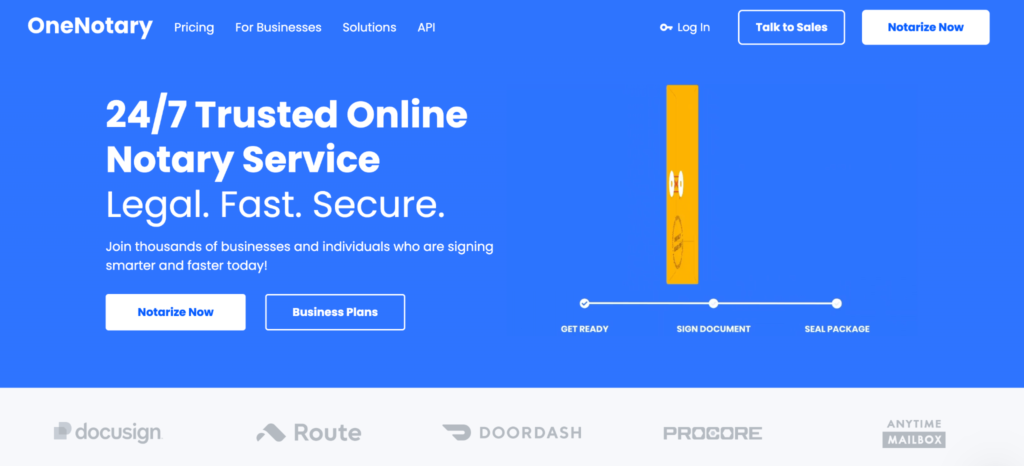
For insurance claims, affidavit notarization and proof of loss, OneNotary is a remote online notary platform, delivering a fraud‑prevention with multi‑factor identity verification. The platform combines all three verification layers: credential analysis, KBA, and biometric matching. Every claims affidavit receives a SOC 2 certified audit trail. Liberty Mutual trusts OneNotary for high‑value claims.
Verification workflow in three steps
- Credential analysis – The signer uploads a driver’s license or passport. OneNotary scans for holograms, fonts, and data consistency. The system rejects expired or suspicious IDs.
- Knowledge‑based authentication – The platform generates dynamic questions from credit and public records. The signer answers within a time limit. Wrong answers trigger a secondary review.
- Biometric matching – The signer takes a live selfie or completes a short video. The AI compares facial geometry to the ID photo. Liveness detection prevents photo spoofing.
Why this matters for insurance carriers
Each notarization creates a tamper‑evident audit trail. The trail includes the ID scan, KBA questions and answers, biometric match score, video recording, and notary journal entry. A claims adjuster can pull this trail during a fraud investigation. The evidence holds up in court. OneNotary credentials are as follows:
- SOC 2 Type II certified
- ISO 27001:2022 compliant
- Used by Morgan Stanley and Vanguard (financial services), plus Liberty Mutual (insurance)
2. Proof
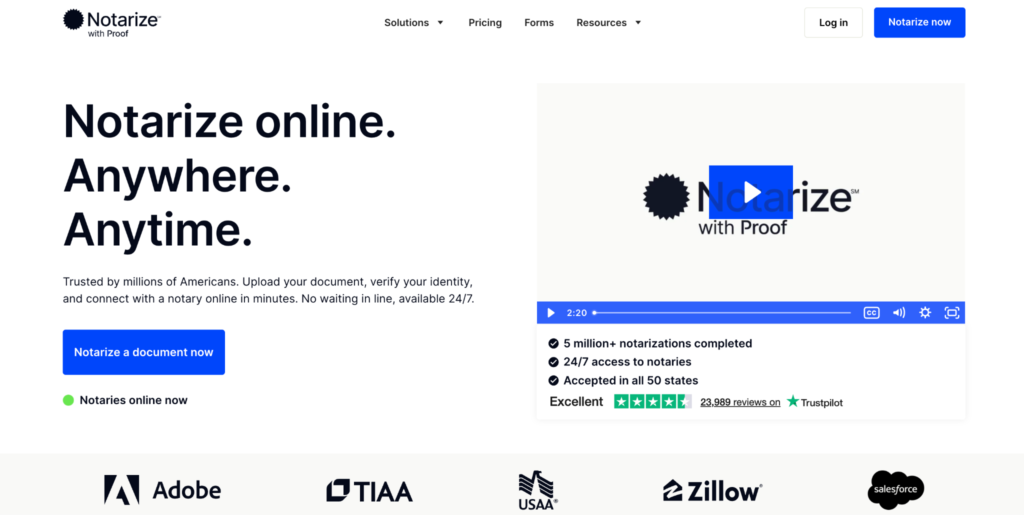
Proof positions itself as a simple RON platform for real estate and business documents. The platform requires an ID scan but stops there. No KBA. No biometric matching. For insurance claims, this creates exposure.
What Proof does well
The user interface is clean. Document uploads take seconds. The platform works for low‑risk notarizations where signer identity is already known.
The fraud prevention gap for insurance
A fraudster can upload a fake ID. Proof’s credential analysis catches some forgeries but not all. Without KBA or biometrics, the carrier has no way to confirm the person on the video call matches the ID owner. A stolen ID passes the check.
To give a real‑world risk example, a fraudster obtains a stolen driver’s license. They upload the ID to Proof. The credential analysis sees a valid license format. The notary on the call sees a face that roughly matches. The proof of loss gets notarized. The carrier pays the claim. The real identity owner discovers the fraud months later.
3. BlueNotary
BlueNotary uses a marketplace model with independent notaries. The platform performs credential analysis on government IDs. But BlueNotary does not require biometric matching. KBA is optional, not default.
Verification features and mishaps
The vendor currently offers several core verification features, including ID scanning with basic fraud checks and session recording for audit purposes. Furthermore, the platform holds a SOC 2 Type II certification, demonstrating a commitment to security and compliance with trust service principles. These features provide a foundational level of security and accountability for user verification processes.
However, the current feature set has notable gaps in advanced verification. Specifically, there is no mandatory biometric matching or liveness detection, which are critical for robust defense against sophisticated spoofing attempts. Additionally, Knowledge-Based Authentication (KBA) is not included as a standard feature, requiring an extra fee and manual enablement, which limits its accessibility and immediate deployment.
How this affects insurance claims
A claims department can request KBA as an add‑on. But busy adjusters may skip the step. Fraudsters know that not all BlueNotary notaries enforce the optional checks. The weakest notary in the marketplace becomes the target. For high‑value life insurance claims, this variability is unacceptable.
4. NotaryCam
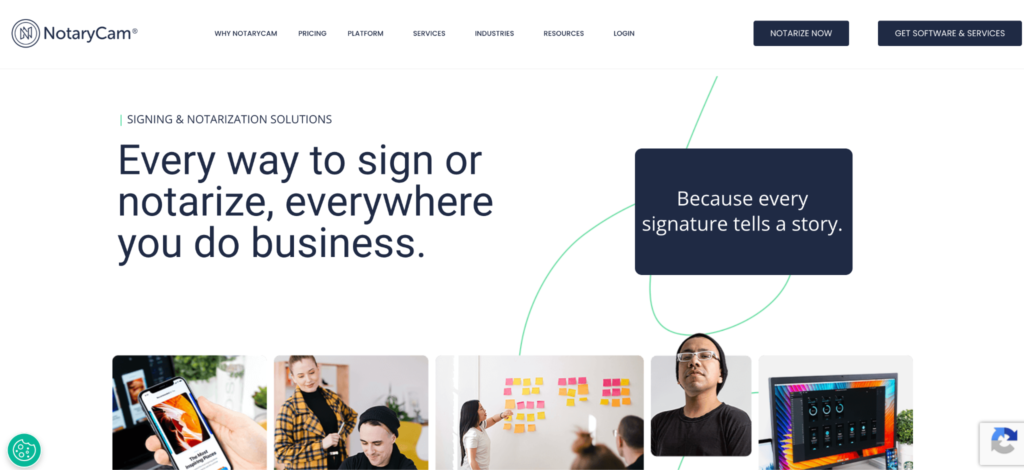
NotaryCam has operated since 2012. The platform focuses on mortgage closings. Identity verification relies on knowledge‑based authentication. But KBA is optional, not a mandatory part of every session. NotaryCam provides the following services:
- Multi‑signer sessions for joint claims
- MISMO certification for real estate
- Session recording and audit logs
Where NotaryCam falls short for fraud prevention
Credential analysis exists but lacks depth. The platform does not require biometric matching. KBA becomes optional when a notary decides to skip it. Insurance carriers cannot enforce a strict verification policy across NotaryCam’s notary network.
Fraud scenario specific to NotaryCam
A life insurance beneficiary submits a death claim. The beneficiary uses a fake ID. The NotaryCam notary performs only the basic ID check. No KBA. No biometrics. The notarized proof of death moves to the carrier. The carrier pays $500,000 to the wrong person. The optional nature of KBA leaves the carrier holding the loss.
5. NotaryLive
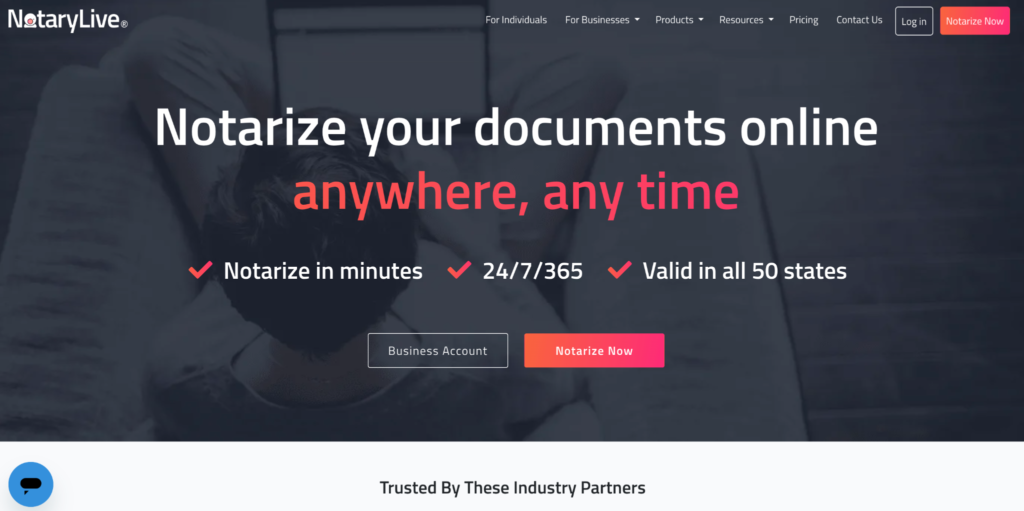
NotaryLive emphasizes simplicity. A user uploads a document, verifies identity through a single step, and connects with a notary. The platform does not perform credential analysis on the ID. Instead, NotaryLive relies on a knowledge‑based authentication only.
The verification flow
The signer answers three to five dynamic questions. No ID scan. No facial comparison. No credential analysis.
Why this fails for insurance claims
KBA confirms that the signer knows certain personal information. It does not confirm that the signer holds a valid government ID. A fraudster with stolen credit data can pass KBA. The fraudster then appears on video as any person. The notary has no ID to compare against. The proof of loss gets notarized anyway.
Carrier exposure
Health insurance claims often involve treatment history and provider information. A fraudster using stolen identity data could notarize a claim for services never rendered. Without credential analysis, the carrier cannot tie the notarization to a real government ID.
6. USVirtualNotary
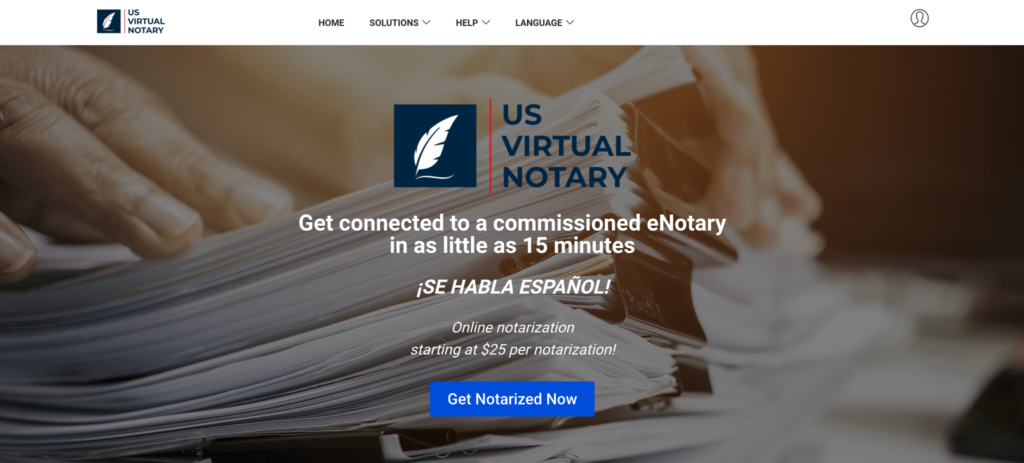
USVirtualNotary targets individual consumers and small firms. The platform offers scheduled appointments. Identity verification is minimal. The user provides a name and email address. No ID scan. No KBA. No biometrics.
The USVirtualNotary process
The notary asks to see an ID during the video call. The notary visually inspects the ID. No automated credential analysis. No database checks. The notary makes a judgment call.
However, Visual ID inspection is the same as in‑person notarization. It relies entirely on the notary’s training and attention. A fake ID that looks reasonable passes. RON regulations require stronger verification than in‑person notarization. USVirtualNotary does not meet that standard.
Regulatory risk
Some states mandate credential analysis for RON. USVirtualNotary’s approach may violate those laws. An insurance carrier using this platform for claims could face regulatory fines and denied subrogation.
Fraud Prevention
OneNotary is the only identity‑verification‑ready RON for insurance. The platform delivers credential analysis, KBA, and biometric matching in every session. The SOC 2 certified audit trail gives carriers evidence that holds up in court. Liberty Mutual and other major carriers trust OneNotary for claims, affidavit notarization and proof of loss.
Insurance fraud costs billions. A strong online notary platform stops fraud before the claim pays. OneNotary provides the verification layers that other platforms leave as optional or missing entirely. For risk managers and claims directors, the choice is clear.